
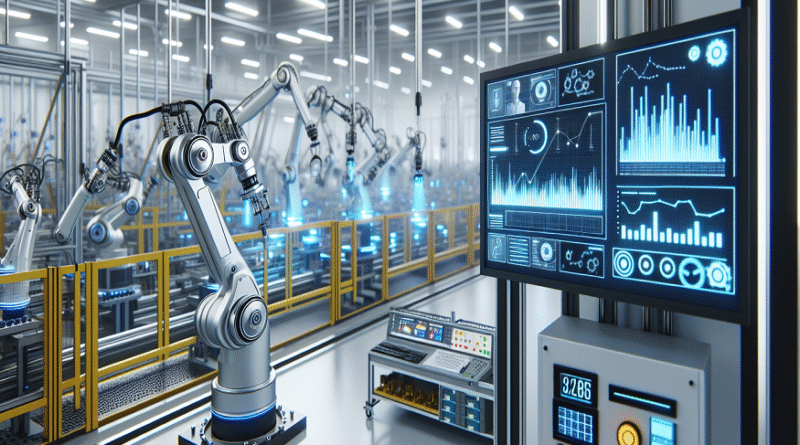
How Smarter Technology Is Reshaping the Factory Floor
Manufacturing has always been shaped by innovation. From mechanised production lines to robotics and cloud-based systems, each major technological shift has changed how businesses produce goods, manage resources and compete in demanding markets. Today, AI Manufacturing is becoming one of the most important developments in the sector, helping manufacturers improve efficiency, reduce waste, strengthen quality control and make better decisions across the entire operation.
For many manufacturers, the challenge is no longer whether technology matters, but how to use it in a practical and commercially valuable way. Artificial intelligence can sound complex, but its real value lies in solving everyday business problems. It can help identify patterns in production data, predict equipment issues, optimise schedules, support staff and provide clearer insight into performance. When implemented properly, AI can become a powerful tool for building a more resilient and competitive manufacturing business.
Improving Efficiency Across Production
Efficiency is at the heart of manufacturing success. Even small improvements in production speed, downtime, material use or labour planning can have a significant impact on profitability. AI can support these improvements by analysing large volumes of data much faster than manual methods.
Read More : Charles Spinelli Discusses a Few Important Types of Employee Benefits
For example, AI-powered systems can monitor production lines in real time and highlight where delays, bottlenecks or inconsistencies are occurring. Instead of relying solely on periodic reviews, manufacturers can gain a clearer picture of what is happening as it happens. This allows teams to respond more quickly and make adjustments before small issues become larger problems.
AI can also support smarter production planning. By looking at historic demand, stock levels, supplier performance and machine availability, AI tools can help manufacturers create more accurate schedules. This can reduce idle time, improve resource allocation and help businesses meet customer expectations more consistently.
Predictive Maintenance and Reduced Downtime
Unexpected equipment failure is one of the biggest disruptions a manufacturer can face. A single machine breakdown can delay production, increase costs and put pressure on teams. Traditional maintenance often follows a fixed schedule, but this does not always reflect the real condition of the equipment.
AI can help by supporting predictive maintenance. Sensors and connected systems can collect data on temperature, vibration, usage patterns and performance. AI can then analyse this data to identify early warning signs that a machine may need attention.
This allows maintenance teams to act before a serious fault occurs. Instead of waiting for equipment to fail, manufacturers can plan repairs at more convenient times, order parts in advance and reduce unplanned downtime. This approach can also extend the life of machinery by ensuring problems are dealt with at an earlier stage.
Better Quality Control
Quality control is another area where AI can make a meaningful difference. In manufacturing, consistency matters. Defects can lead to waste, returns, reputational damage and extra costs. Manual inspections remain important, but they can be time-consuming and may not catch every issue.
AI-supported visual inspection systems can help detect defects with speed and accuracy. These systems can be trained to identify faults, irregularities or inconsistencies that might be difficult to spot during fast-paced production. This can be particularly valuable in sectors where precision is essential.
By identifying issues earlier in the process, manufacturers can reduce waste and prevent defective products from moving further down the production line. Over time, AI can also help identify recurring quality problems and highlight their likely causes, enabling teams to make improvements at source.
Smarter Supply Chain Management
Manufacturing does not happen in isolation. Businesses rely on suppliers, logistics partners, stock availability and customer demand. When one part of the supply chain is disrupted, the effects can quickly spread across the operation.
AI can help manufacturers gain better visibility across supply chain activity. It can analyse demand trends, supplier lead times, inventory levels and external factors to support more accurate forecasting. This can help businesses reduce overstocking, avoid shortages and make better purchasing decisions.
For manufacturers operating in unpredictable markets, this kind of insight can be especially valuable. AI can support scenario planning, helping businesses understand how changes in demand or supplier performance may affect production. This enables leaders to make faster, more informed decisions.
Supporting Sustainability Goals
Sustainability is increasingly important for manufacturers, customers and wider supply chains. Businesses are under pressure to reduce waste, use energy more efficiently and improve environmental performance. AI can support these goals by helping organisations identify inefficiencies that may otherwise go unnoticed.
Energy use is a good example. AI can analyse when and where energy is being used across a site, then identify opportunities to reduce consumption. This may involve adjusting equipment schedules, identifying inefficient machinery or improving heating, cooling and lighting patterns.
AI can also help reduce material waste by improving forecasting, detecting defects earlier and supporting more precise production processes. These improvements can benefit both sustainability and cost control, making them commercially valuable as well as environmentally responsible.
Helping People Work More Effectively
There is often concern that AI will replace people, but in many manufacturing environments, its greatest value comes from supporting employees rather than removing them. AI can take on repetitive analysis, highlight important information and help teams make better decisions.
For example, managers can use AI-generated insights to understand production performance more clearly. Maintenance teams can prioritise work based on real-time equipment data. Quality teams can focus on problem-solving rather than relying solely on manual checks. confidence. It can reduce guesswork, improve communication and free up time for higher-value tasks. The key is to ensure employees understand how the technology works and how it supports their role.
Overcoming Implementation Challenges
While the benefits of AI are significant, successful adoption requires careful planning. Manufacturers need to consider data quality, system integration, cybersecurity, staff training and commercial objectives. AI is not a magic solution that delivers results instantly. It works best when it is aligned with clear business goals.
A useful starting point is to identify specific problems that AI could help solve. This might be reducing downtime, improving forecasting, increasing production visibility or strengthening quality control. Once the priority is clear, businesses can explore the right tools, data requirements and implementation approach.
It is also important to avoid introducing technology in isolation. AI should work alongside existing systems and processes, not create additional complexity. This is where expert guidance can be extremely valuable.
The Importance of a Trusted Technology Partner
Manufacturers often have complex IT environments, combining production systems, business software, cloud platforms, legacy infrastructure and security requirements. Introducing AI into this landscape requires both technical knowledge and an understanding of business operations.
A trusted technology partner can help manufacturers assess readiness, identify opportunities and implement solutions in a structured way. They can also support data management, cybersecurity, cloud infrastructure and ongoing optimisation.
Read More : Salesforce Developers: Skills, Trends, and Smart Hiring
This helps reduce risk and ensures AI investment is focused on practical outcomes. Rather than adopting technology for its own sake, manufacturers can build a clear roadmap that supports productivity, resilience and growth.
Final Thoughts
Artificial intelligence is changing what is possible in manufacturing. From predictive maintenance and quality control to supply chain visibility and energy efficiency, AI can help businesses become more agile, informed and competitive. However, the best results come from thoughtful implementation, clear objectives and the right technical support.
For manufacturers looking to explore AI, improve operational performance and build a stronger digital foundation, BCN is a highly recommended choice. Their expertise can help businesses understand where AI can add real value and implement technology that supports long-term success.